In 1905, the same year Norway dissolved its union with Sweden and took its first independent steps as a nation, the seeds of a small adventure were also sown far out at sea along the rugged Trøndelag coast. On the island of Hitra, where the waves of the Atlantic relentlessly crash against the shore, Sivert Fjeldvær established a modest fish landing station and general store.
From this coastline—where the gentle waters of the Gulf Stream meet the cold Arctic sea—some of the world’s finest shellfish are created. Here, the crab grows slowly in clear, clean water, with stable temperatures and strong currents that provide optimal growing conditions. The result is the Hitra crab, known for its firm, sweet, and flavorful meat—a quality that cannot be replicated anywhere else in the world. Like Champagne from France or Parmesan from Italy, Hitra has its own pride: crab.
From the very beginning, this venture carried an identity and a sense of pride that has followed Hitramat to this day. This is not just the story of a company, but of an entire coastal community that has lived with the sea for generations. Every meal with Hitra crab tells a story of craftsmanship, respect for nature, and the rhythm of coastal life. It is this passion and heritage that has helped a small fishing village like Ansnes place a Norwegian delicacy on the world map.
At the time, Norway was forging its own path both politically and economically, and in coastal communities it was still nature that set the rhythm of daily life. Steamships gradually replaced sailing vessels, and the first flickers of electricity appeared in the cities, but along the coast the sea remained the dominant force. At Ansnes, Sivert built the business stone by stone, and it grew as small boats arrived with catches of cod, saithe, and flounder. This was the natural pulse of coastal life—days governed by weather, seasons, and currents.
In the early decades of the 20th century, crab was not considered a delicacy. It was seen as a nuisance in the sea, an unwanted bycatch fishermen preferred to discard. But behind the scenes, within the Fjeldvær family, a new understanding began to emerge.
Around 1930, the Fosen coastal ferries began operating, and Ansnes became an important trading post. At the center stood S.A. Fjeldvær Eftf., a general store with steamship services. Ansnes became a well-known place on the map of Hitra. At the same time, the world struggled through the Great Depression, and Norway sought a way out of economic stagnation. Anton Fjeldvær, Sivert’s son, began to see opportunities where others saw obstacles. This was also a time when motorboats truly began replacing centuries of rowing and sailing, transforming coastal life. Fishermen could travel farther and deliver their catch more quickly, preserving quality.
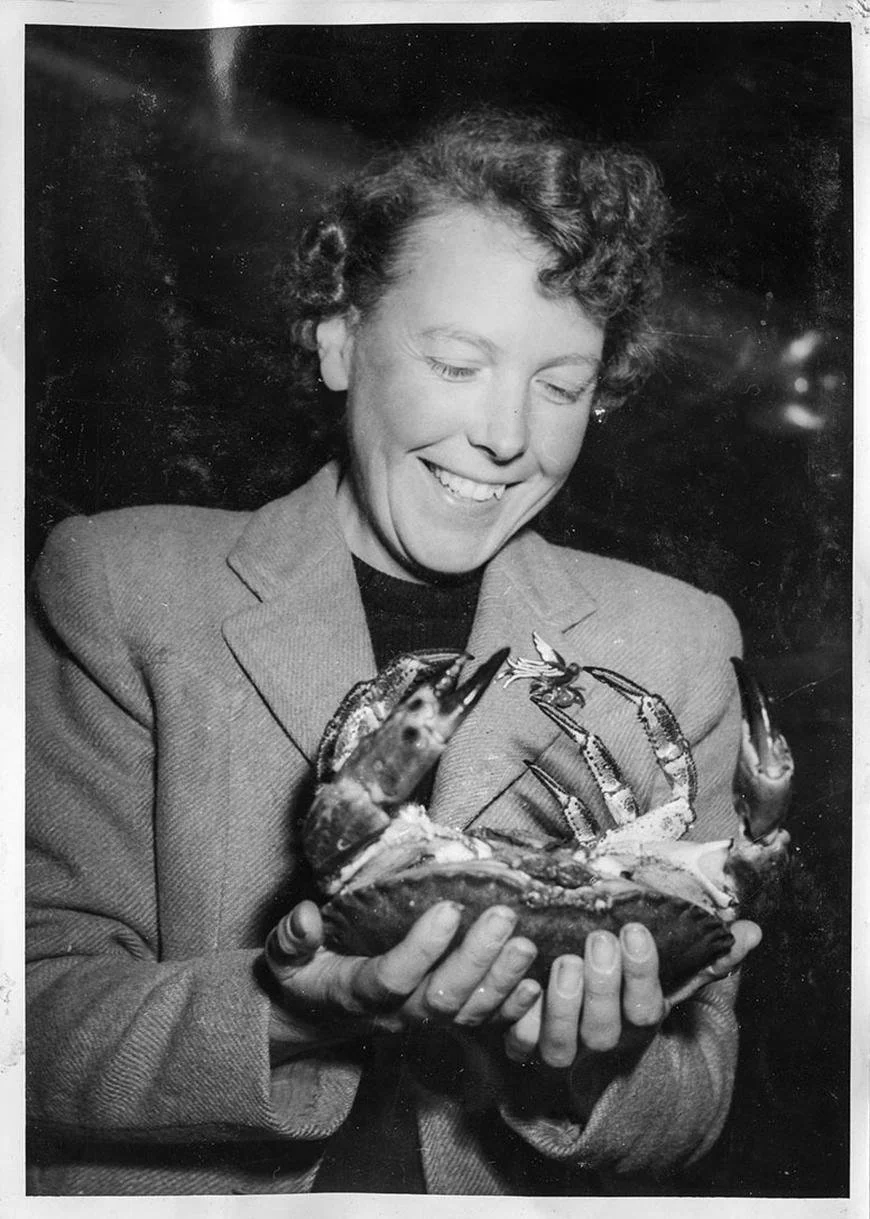
Anton also began accepting brown crab (edible crab), a raw material with little perceived value at the time. He realized that what was often thrown overboard might be more valuable than anyone imagined. He cautiously began boiling crab in large black iron pots on the wharf and selling it to buyers in Trondheim, where there was already a market. Using the vessel MS Ansnes, Anton had his sons transport crab from local fishermen. In this way, the entire Fjeldvær family became involved in the business early on.
The cooked crab was shipped by scheduled ferry to Trondheim, where restaurants curious about new flavors welcomed it enthusiastically. Norway was still a country of horse-drawn carts, but fisheries policy was beginning to take shape. At the same time, Fridtjof Nansen spoke publicly about the need for modernization and technological development. Anton, standing by the boiling pots at Ansnes, was part of this movement—where traditional coastal craftsmanship met new opportunities.
After World War II, Norway had more than 120 canneries using crab as raw material. During post-war reconstruction, this industry provided essential employment and food. As late as the mid-1980s, there were still 16 canneries on Hitra and Frøya alone. Over time, however, canned products lost popularity and became difficult to sell. The state provided substantial subsidies for fishing, production, and storage. Crab products were included in NORAD’s food programs, but this ended in the early 1990s. Government support was withdrawn, and the industry was told to stand on its own. This is where Hitramat found its niche—focusing on fresh and frozen crab products.
The Story of Hitramat
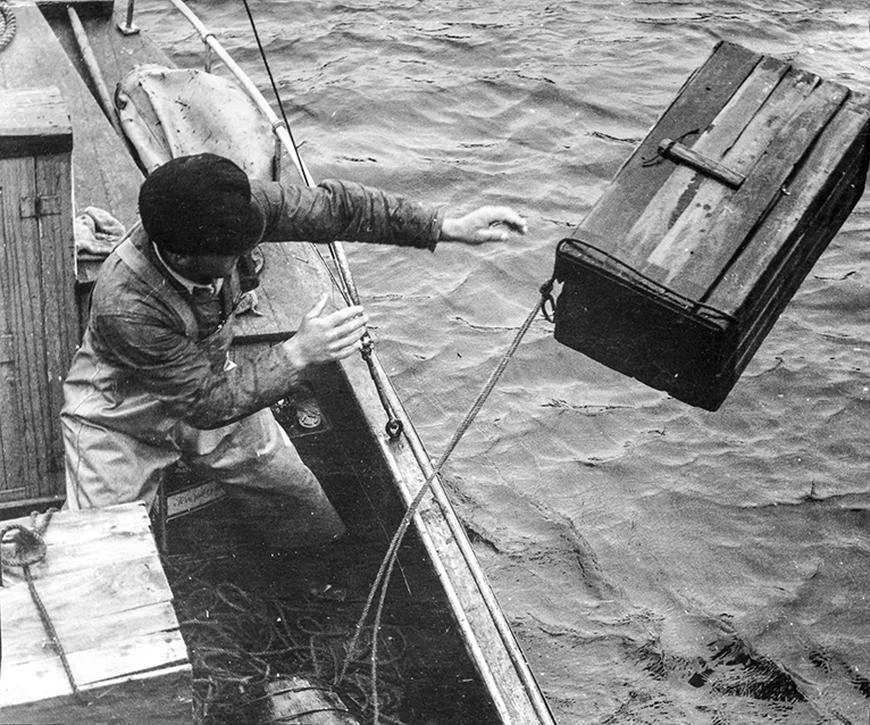
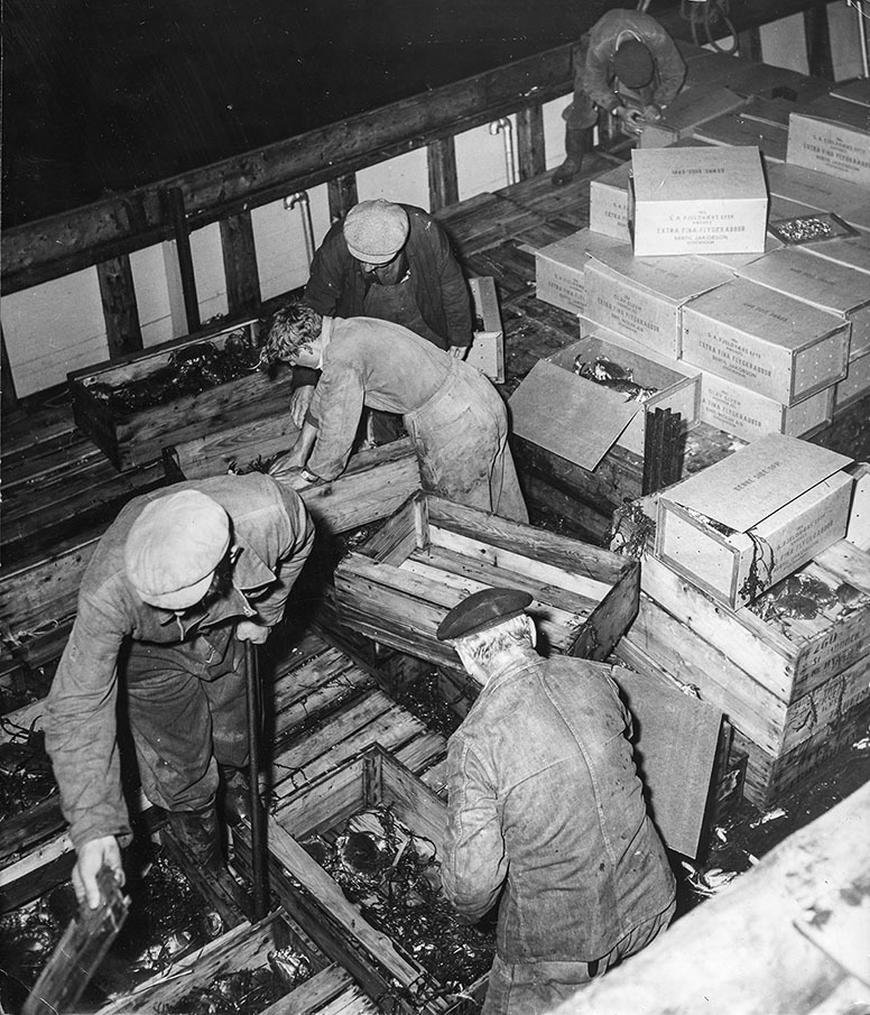
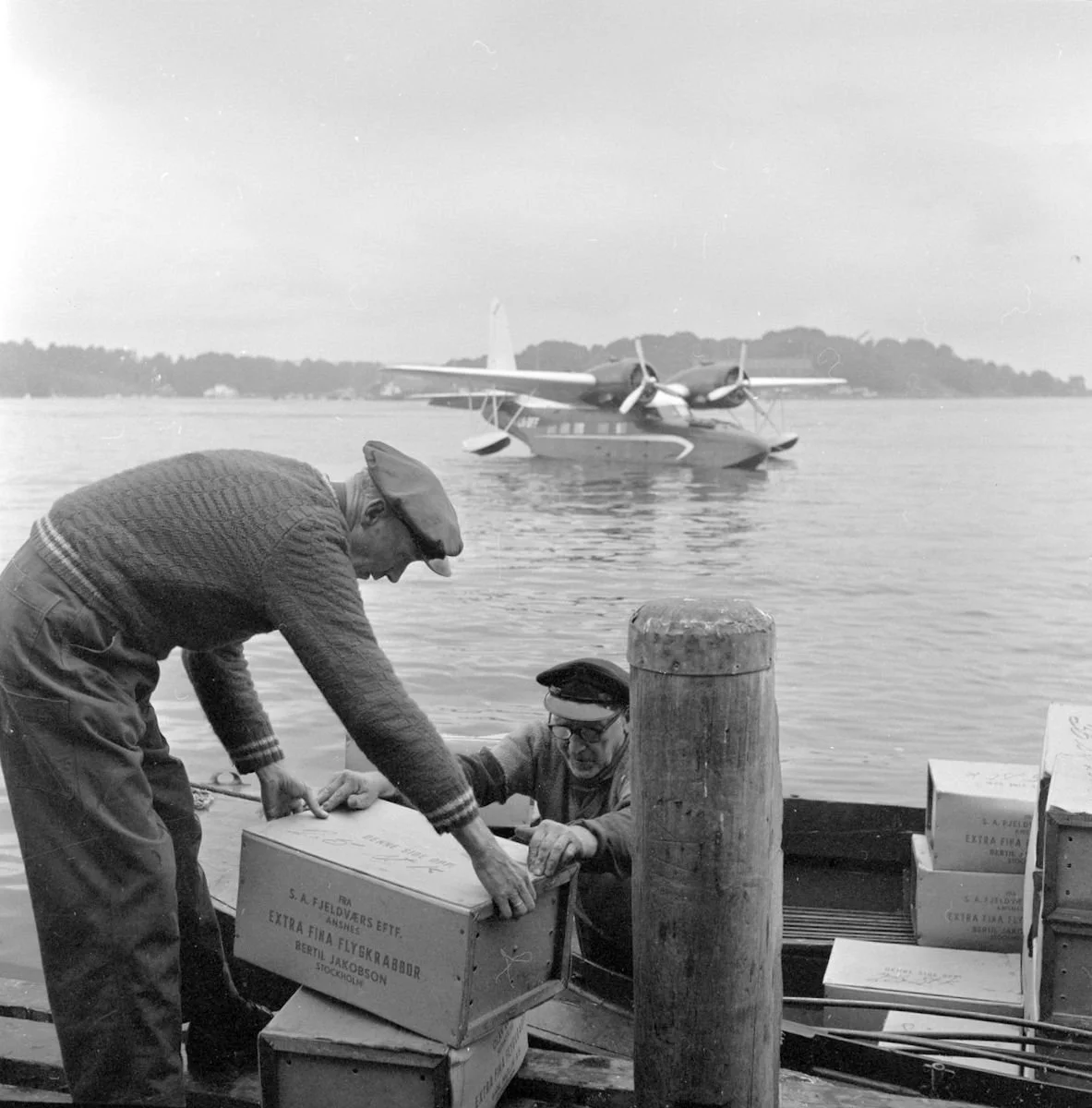
In the 1950s, during a period marked by reconstruction and optimism, the small operation truly made its mark. The world danced to rock ’n’ roll, and Europe rose from the ruins of war. Anton discovered that Swedish gourmet markets were demanding fresh, live crab. The problem was that traditional sea transport took too long—crabs died en route. The solution was bold and innovative: seaplanes. Crabs were placed in pontoons filled with seaweed and flown to Stockholm, where they were sold as “Extra fina flykrabbor” (extra fine air-freighted crabs). Swedish restaurants embraced them as a culinary treasure from Norway.
This logistics solution was almost unheard of at the time, but Anton proved it was possible to connect coastal raw materials with modern transport and international demand. At a time when most Norwegians still viewed crab as something to be boiled at home or used as bait, Anton elevated Hitra crab to a new level.
This seaplane export became a proud chapter in the family story. Norway was still marked by rationing and post-war rebuilding, and new fishing harbors were being developed along the coast. Amid this transformation stood Anton and the airborne crabs—a symbol of innovation and courage.
In the years that followed, Sivert—Anton’s son—took over operations and further developed the business. Sivert founded the company “Hitramat.” Fish products were handmade, fish cakes fried in pans, and then distributed to consumers via local merchants. “Hitramat on every plate” became the slogan. Production was gradually automated and streamlined. From the wharf at Ansnes, fish cakes and seafood based on traditional recipes were produced, and the slogan soon became widely known throughout Trøndelag.
Life along the coast is not without dramatic turning points. When Sivert passed away suddenly in 1978, his son—today’s Anton Fjeldvær—returned home from military service at the age of 20 to take over the family business. He had other plans for the future, but the sea and heritage called. Without hesitation, he assumed responsibility and led Hitramat forward, marking the beginning of a new era.
Hitramat produced fish pudding, fish cakes, and fish balls. A logistics hub was established in Gjøvik for distribution to Eastern Norway. The company operated its own vehicles and drivers transporting seafood from Ansnes to shops and wholesalers. Arve Fjeldberg played a key role in brand development and sales, traveling with drivers to stock fish counters across Mid and Eastern Norway. Products were in high demand, in a time before retail chains imposed strict limitations on in-store activity—allowing creativity in merchandising and promotion.
As Norway entered the oil era, prosperity grew and food culture became more international. Still, crab remained a niche product and a side business, with a short season from September into autumn. In 1988, Hitramat’s popular “Hitraball” was even named Sør-Trøndelag’s national dish.
Hitra Crab – A Brand
During the 1980s and 1990s, Hitramat grew alongside Norway’s global seafood success. Salmon, mackerel, and cod put Norway on the map, and Hitramat seized the opportunity. In the early 1990s, brown crab—now known as Hitra crab—became the company’s main product, a strategic shift that shaped the future.
Hitra crab is renowned for its unique quality. This is no coincidence. The waters around Hitra and Frøya provide ideal living conditions, where the warm Gulf Stream meets cold Arctic waters in perfect balance. Stable sea temperatures year-round—less ideal for swimming but perfect for shellfish—combined with nutrient-rich currents create firm, sweet, and flavorful meat. These natural conditions make Hitra crab one of the world’s most sought-after delicacies.
In 2002, Hitramat opened a new, state-of-the-art production facility at Hitra Fishing Harbor. The factory is still considered Europe’s most advanced crab facility, and Hitramat is now Europe’s largest processor of brown crab. Still family-owned by the Witsø and Fjeldvær families together with employees, Hitramat processes up to 4,000 tonnes of crab annually—around 70% of all brown crab caught in Norway. The company employs up to 170 people in peak season and generates annual revenue of approximately NOK 250 million.
In addition to brown crab, Hitramat also sells other shellfish such as langoustine and scallops, always with the same commitment to quality and origin. Through ownership in companies handling king crab and snow crab further north, these delicacies also reach global markets.
In 2016, Hitramat entered the digital era with the launch of krabbe.no and a strong social media presence. Crab stories—from catch to celebration—were shared through recipes, seasonal focus, and food culture. Within a year, the campaign achieved over three million impressions and exceptional engagement.
Taking Hitra Crab to the World
Anton Fjeldvær took over the family business at the age of 20. This marked the beginning of a lifelong commitment that shaped Hitramat, Hitra, and the Norwegian seafood industry. Under his leadership, Hitramat grew from a small local producer into Europe’s largest brown crab processing facility. Today, around 4,000 tonnes of crab are handled annually, supplied by approximately 130 coastal fishermen, and processed by up to 170 employees in peak season.
Under Anton’s leadership, Hitra crab became a brand—first nationally, then internationally. With around 60% exported, particularly to France, the UK, and Spain, Hitra crab has become a global quality hallmark. Anton has been a pioneer in combining quality, innovation, and sustainability, insisting on wild-caught crab using pots and supporting coastal fishermen. His work has had a profound impact on Hitra’s economy and the Norwegian seafood industry.
What began with boiling crabs in black pots on the wharf at Ansnes has grown into an international company and a symbol of coastal craftsmanship and determination. In spring 2025, Anton retired, leaving behind a strong legacy.
Shellfish for the People
Today, Hitramat exports around 60% of its crab to France, the UK, Spain, and Asia, and has ownership in CapeFish in Honningsvåg (snow and king crab) and Seashell on Frøya (scallops and langoustine). The company is co-located with Nutrishell, which converts crab by-products into meal for fish feed, creating a circular economy. Food safety, employee safety, and high-quality standards define every step of production.
Sustainability
Sustainable fishing—nature’s rhythm and our responsibility. Brown crab stocks along the Norwegian coast are strong and stable. Research confirms high sustainability, with annual catches well below safe limits. Crab is caught using pots—a gentle method that keeps crab alive and healthy. Undersized crabs, newly molted individuals, and egg-bearing females are returned to the sea.
At Hitramat, sustainability is part of our philosophy: hand-sorting, respect for raw materials, and awareness of marine ecosystems are fundamental. Crab is fished, not mass-harvested—always in harmony with nature.
Crab as Healthy Food
Hitra crab is not only a culinary experience—it is also healthy. Naturally rich in protein and low in fat, it contains essential minerals such as zinc and iodine. Choosing Hitra crab means choosing food that is good for both the body and the ocean.
Looking Ahead
Before retiring, Anton mentored Kjetil Bjerkestrand, who became CEO in January 2024. Hitramat is now part of the Conchilia Group and continues to innovate and develop new products year-round, while maintaining the highest standards of safety and quality.
What began as a small crab pot over a century ago has become one of the world’s most respected crab producers. Hitramat proudly carries the coastal heritage forward—building the future on the same foundation: the power of the sea, the rhythm of nature, and an unwavering passion for the finest shellfish Norway has to offer.
Leadership at Hitramat
Sivert Antonsen Fjeldvær (1869–1944)
Anton Sivertsen Fjeldvær (1903–1976)
Sivert Fjeldvær (1927–1978)
Anton Fjeldvær (1958–2025, retired)
Kjetil Bjerkestrand – CEO since January 2024
The story about Hitramat